

Digital Twin
Digital Twin
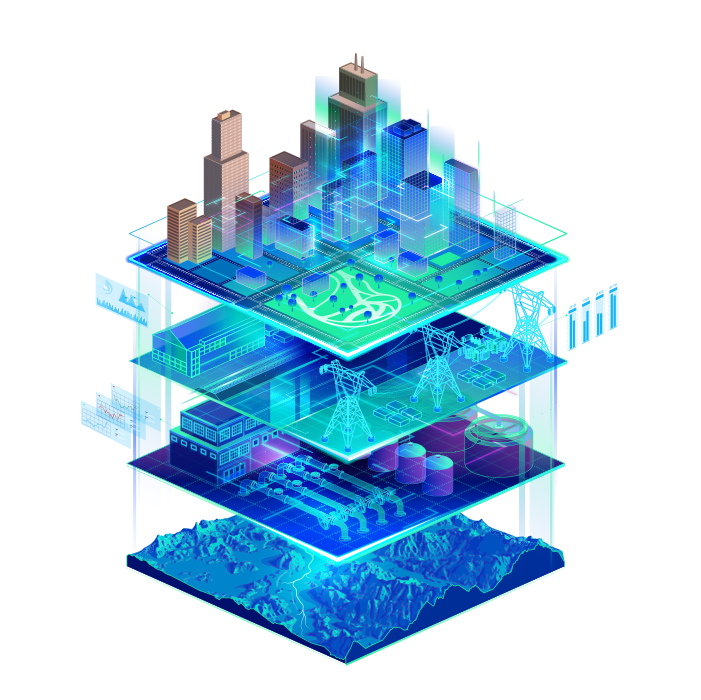
GIS creates digital twins of the natural and built environments
What is a digital twin?
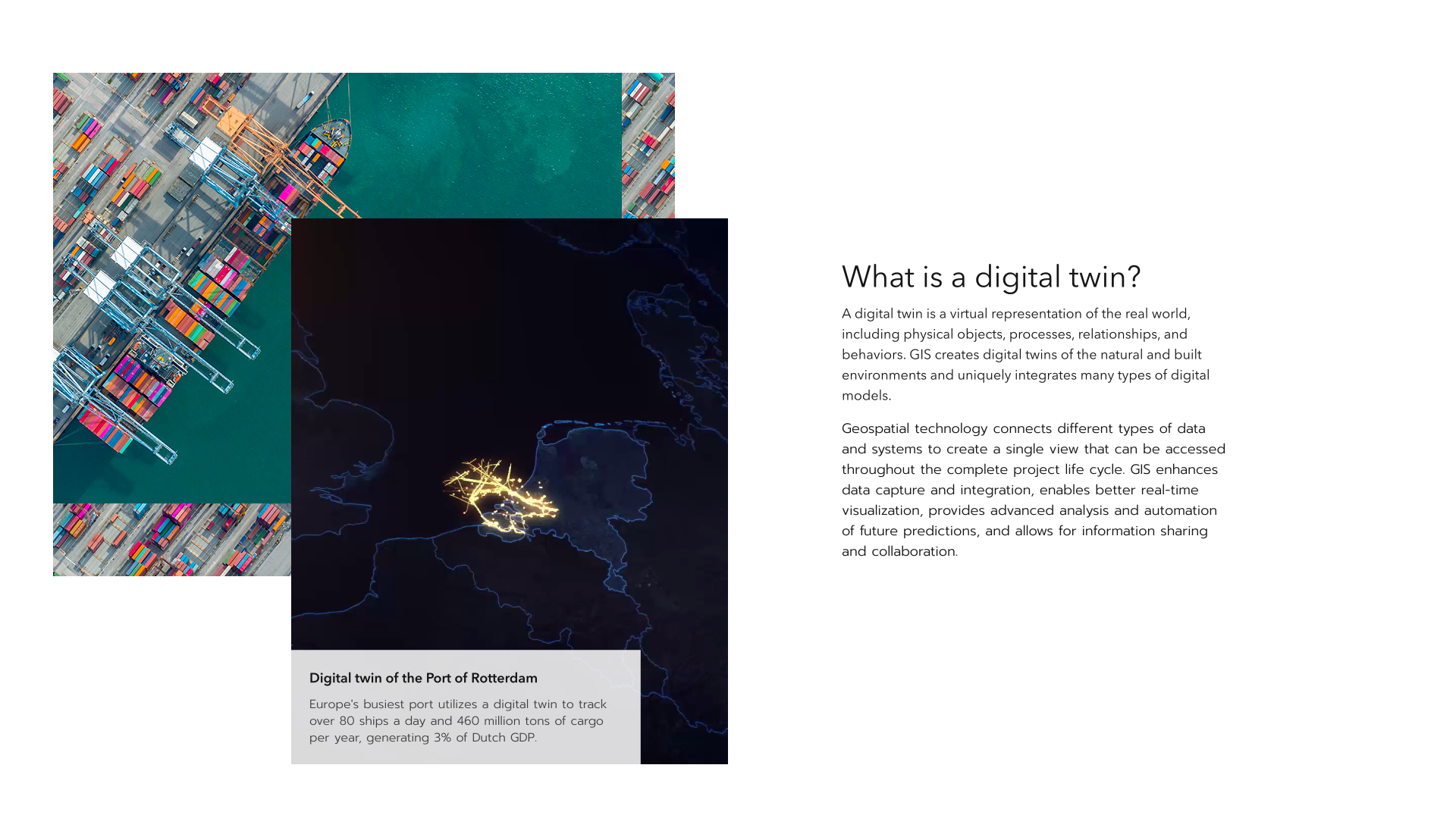
A digital twin is a virtual representation of the real world, including physical objects, processes, relationships, and behaviors. GIS creates digital twins of the natural and built environments and uniquely integrates many types of digital models.
Geospatial technology connects different types of data and systems to create a single view that can be accessed throughout the complete project life cycle. GIS enhances data capture and integration, enables better real-time visualization, provides advanced analysis and automation of future predictions, and allows for information sharing and collaboration.
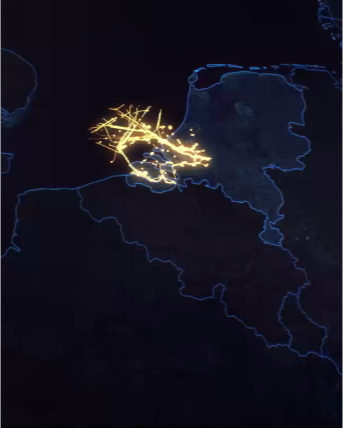
Digital twin of the Port of Rotterdam
Europe’s busiest port utilizes a digital twin to track over 80 ships a day and 460 million tons of cargo per year, generating 3% of Dutch GDP.
A framework to create and integrate digital twins
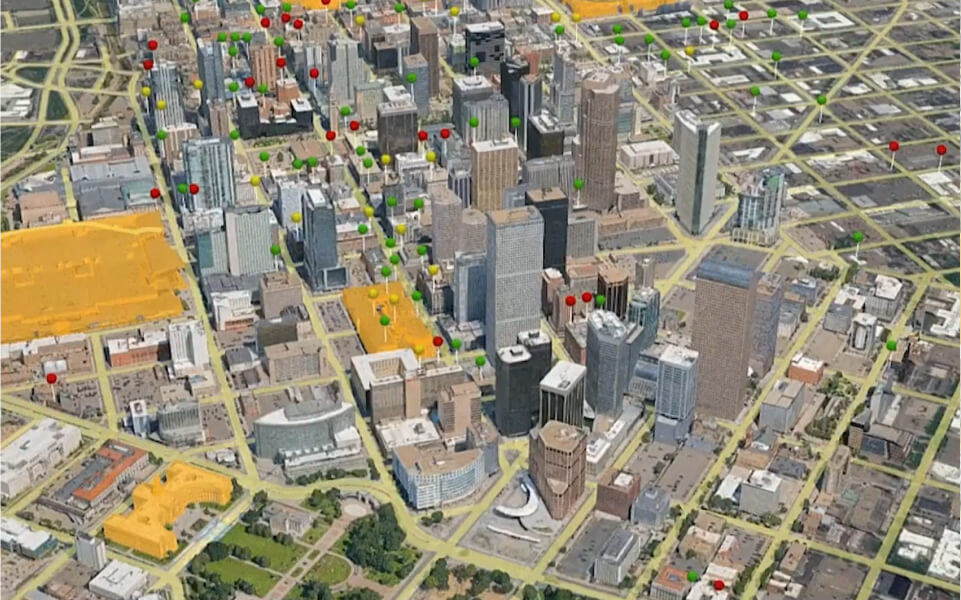
Our world is rapidly transforming into a digital place. Digital twins are abstracting and modeling everything, improving business processes, reducing risk, optimizing operational efficiencies, and enhancing decision-making with automation to predict outcomes. Digital twins provide greater context to solve business challenges by creating relationships and streamlining workflows. Geographic information system (GIS) technology is foundational for any digital twin. Esri’s geospatial technology interconnects information, systems, models, and behaviors with spatial context, creating holistic digital representations of environments, assets, networks, and cities.

A framework to create and integrate digital twins
Our world is rapidly transforming into a digital place. Digital twins are abstracting and modeling everything, improving business processes, reducing risk, optimizing operational efficiencies, and enhancing decision-making with automation to predict outcomes. Digital twins provide greater context to solve business challenges by creating relationships and streamlining workflows. Geographic information system (GIS) technology is foundational for any digital twin. Esri’s geospatial technology interconnects information, systems, models, and behaviors with spatial context, creating holistic digital representations of environments, assets, networks, and cities.

ArcGIS: The Foundation for
Digital Twins eBook
Learn how digital twins benefit from GIS integration and explore use cases and solutions that demonstrate how ArcGIS supports digital twin enablement.

ArcGIS: The Foundation for
Digital Twins eBook
Learn how digital twins benefit from GIS integration and explore use cases and solutions that demonstrate how ArcGIS supports digital twin enablement.

Elements of a digital twin


Data capture and integration


Real time and visualization


Share and collaborate


Analyze and predict
Data capture and integration
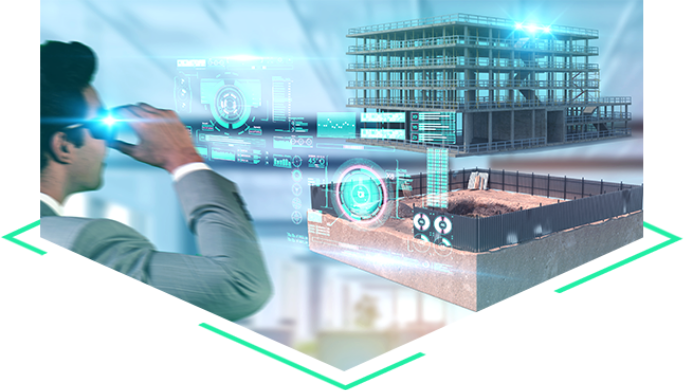
Digital twins are modernizing how organizations capture and visualize data, integrate
networks, and analyze information.

Real time and visualization
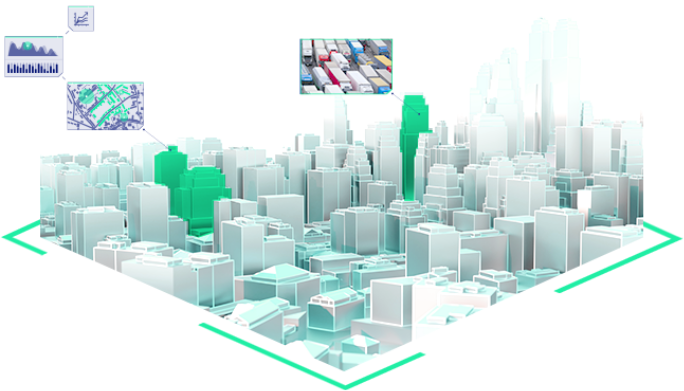
Make the right decisions, discover new patterns, and unlock data's potential with
real-time information and an authoritative network.


Share and collaborate
GIS technology supports smart organizations and communities by improving
information sharing, eliminating data silos, and increasing internal and external
engagement.

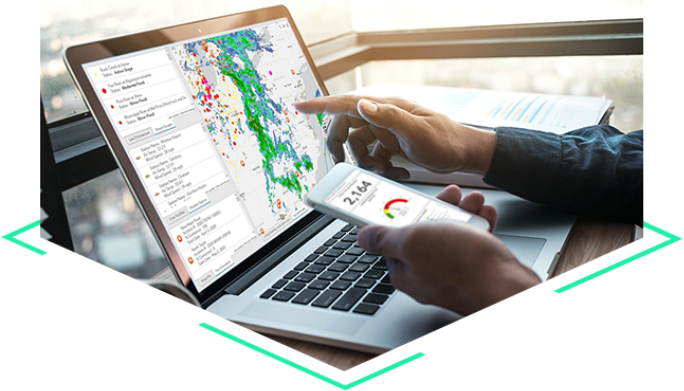
Analyze and predict
Analyze and make accurate predictions using powerful statistical, machine learning
(ML), deep learning (DL), and artificial intelligence (AI) methods.

Elements of a digital twin
Data capture and integration
Real time and visualization
Share and collaborate
Analyze and predict
Data capture and integration
Digital twins are modernizing how organizations
capture and visualize data, integrate networks, and
analyze information.
Real time and visualization
Make the right decisions, discover new patterns,
and unlock data's potential with real-time
information and an authoritative network.

Share and collaborate
GIS technology supports smart organizations and
communities by improving information sharing,
eliminating data silos, and increasing internal and
external engagement.
Analyze and predict
Analyze and make accurate predictions using
powerful statistical, machine learning (ML), deep
learning (DL), and artificial intelligence (AI)
methods.

Related Articles

Asset Management with Digital Twin & ArcGIS
In a world where data is an asset, modern asset management goes beyond simply knowing where your assets are. It’s about understanding their real-time status, operational readiness, and maintenance

Digital Twin Technology Drives Nottingham’s City Center Renewal
Nottingham City Council has demonstrated that the future of city planning lies at the intersection of visualization technology, data analysis, and collaboration.

On-Site with a Construction Industry Digital Twin
For seasoned veterans in the infrastructure realm, the most impressive thing being built today isn’t a bridge or a skyscraper. it’s a digital version of the worksite itself.

6 Case Studies on Digital Twins
Geographic information system technology creates digital twins of social, natural, and built environments and uniquely integrates many types of digital models.

Achieving Contextual Awareness to Improve Operations and Maintenance
The operations digital twin contains a phenomenal level of detail. Integrated GIS, BIM, and high-resolution imagery data provides a robust system of record of physical assets.

Interconnecting GIS and Digital Twins
A modern GIS is a powerful technology for representing a holistic digital twins in spatial context . GIS allows you to abstract and model everything, bringing together many different information models.

ArcGIS—The Foundation for Digital Twins
A modern GIS is a powerful tool used to represent a holistic digital twin in spatial context. Digital twins can address problems associated with understanding the historical events of an asset
Related Articles
Asset Management with Digital Twin & ArcGIS
In a world where data is an asset, modern asset management goes beyond simply knowing where your assets are. It’s about understanding their real-time status, operational readiness, and maintenance
Digital Twin Technology Drives Nottingham’s City Center Renewal
Nottingham City Council has demonstrated that the future of city planning lies at the intersection of visualization technology, data analysis, and collaboration.
On-Site with a Construction Industry Digital Twin
For seasoned veterans in the infrastructure realm, the most impressive thing being built today isn’t a bridge or a skyscraper. it’s a digital version of the worksite itself.
6 Case Studies on Digital Twins
Geographic information system technology creates digital twins of social, natural, and built environments and uniquely integrates many types of digital models.
Achieving Contextual Awareness to Improve Operations and Maintenance
The operations digital twin contains a phenomenal level of detail. Integrated GIS, BIM, and high-resolution imagery data provides a robust system of record of physical assets.
Interconnecting GIS and Digital Twins
A modern GIS is a powerful technology for representing a holistic digital twins in spatial context . GIS allows you to abstract and model everything, bringing together many different information models.
ArcGIS—The Foundation for Digital Twins
A modern GIS is a powerful tool used to represent a holistic digital twin in spatial context. Digital twins can address problems associated with understanding the historical events of an asset